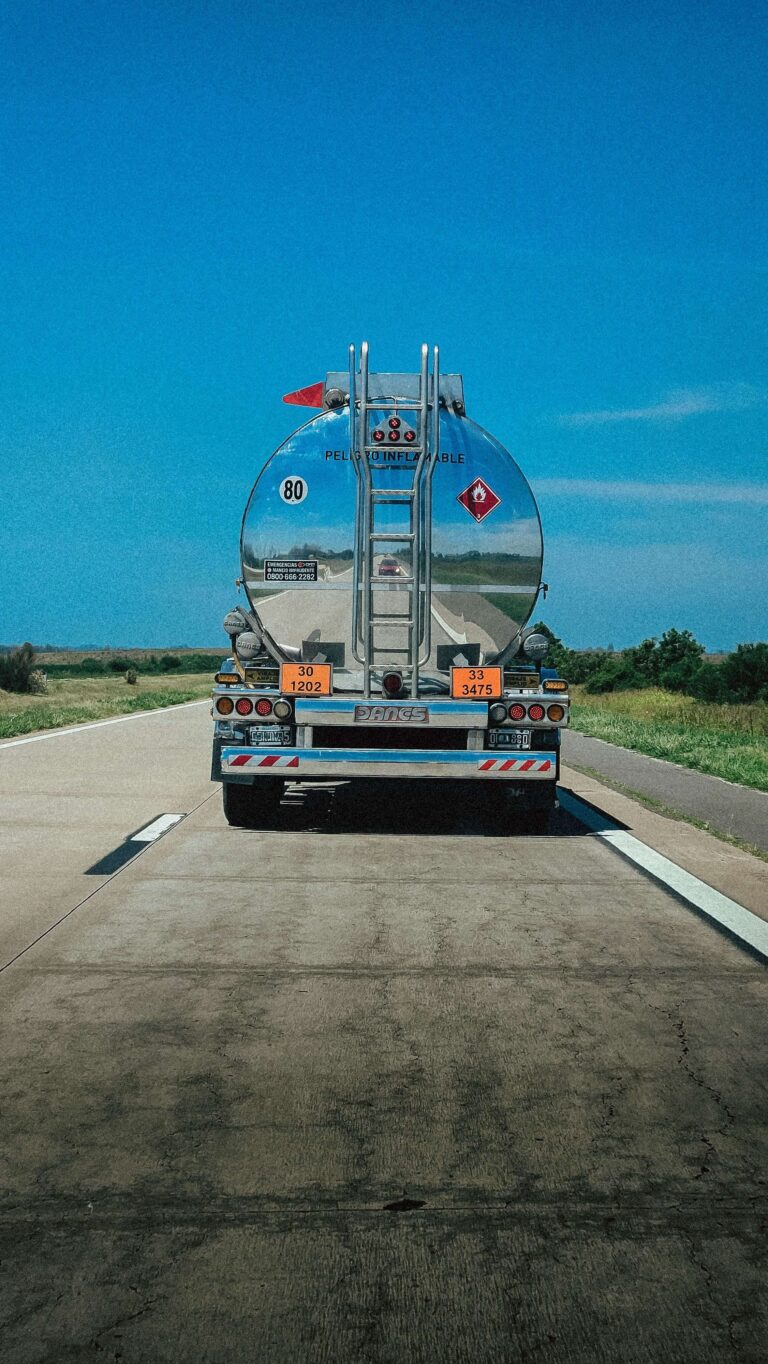
Many businesses that handle, ship, or receive chemicals, batteries, gases, paints, cleaning products, or industrial materials are already working with dangerous goods, whether they know it or not. Understanding how dangerous goods are classified under UK law is essential for anyone involved in their production, distribution, or transport. This guide explains exactly what counts as a dangerous good, how goods are classified, and what that classification means in practice.
What Is a Dangerous Good: The Legal Definition
Under the ADR regulations, the European Agreement Concerning the International Carriage of Dangerous Goods by Road — a dangerous good is defined as any substance or article that, due to its physical, chemical, or biological properties, presents a hazard to human health, safety, property, or the environment when transported.
The classification system for dangerous goods originates from the United Nations Model Regulations for the Transport of Dangerous Goods, which forms the international framework on which all major transport regulations, including ADR for road transport in the UK, are based. When a substance or article is assigned a UN number, it has been formally identified as a dangerous good under this international system.
In practical terms, a dangerous good is any substance or article that appears in the UN Dangerous Goods List, or that meets the classification criteria for one of the nine dangerous goods classes set out in ADR. The classification is based on the inherent physical or chemical properties of the substance, not on how carefully it is handled, how securely it is packaged, or how experienced the person transporting it might be.
The Two Key Questions: Substance or Article?
The ADR regulations make an important distinction between a substance and an article. Understanding this distinction helps clarify why some goods that don’t look dangerous at first glance are still classified as dangerous goods.
Dangerous Substances
A dangerous substance is a chemical or material that presents a hazard due to its inherent properties, for example, its flammability, corrosiveness, toxicity, reactivity with water, or ability to harm human health or the environment. Dangerous substances include liquids, solids, gases, powders, and mixtures. Examples include petrol, sulphuric acid, chlorine gas, sodium hydroxide, and hydrogen peroxide.
Dangerous Articles
A dangerous article is a manufactured item that contains or incorporates a dangerous substance or energy source, and that presents a hazard during transport. The substance itself may be contained within the article, meaning it is not immediately visible, but it still makes the article a dangerous good. Examples include lithium batteries (which contain reactive lithium chemistry), aerosol cans (which contain pressurised gas and often a flammable propellant), fire extinguishers, and airbag inflators.
Why this matters for UK businesses:
Many businesses that would never describe themselves as handling chemicals are, in fact, regularly transporting dangerous articles. A business that ships laptops containing lithium-ion batteries is transporting dangerous goods. A cleaning company that moves aerosol products between sites is transporting dangerous goods. A motor trade business that dispatches vehicle airbag modules is transporting dangerous goods. The article classification means that many goods that appear harmless in their packaged state are still subject to ADR requirements when transported.
The Nine Dangerous Goods Classes
The UN Model Regulations, and the ADR framework based on them, divide all dangerous goods into nine classes according to the primary type of hazard they present. These are the classes used by the transportation of dangerous goods regulatory system worldwide whether by road, sea, rail, or air.
| Class | Hazard Type | Description | UK Examples |
|---|---|---|---|
| Class 1 | Explosives | Substances or articles that can explode, deflagrate, or react rapidly to produce gas, heat, or light. Divided into six divisions (1.1–1.6) based on the type and scale of explosion risk. | Fireworks, ammunition, detonators, signal flares, airbag inflators |
| Class 2 | Gases | Substances that are gaseous at 50°C or have a vapour pressure exceeding 300 kPa at 20°C. Divided into flammable gases (2.1), non-flammable non-toxic gases (2.2), and toxic gases (2.3). | LPG, oxygen cylinders, aerosol cans, refrigerant gases, acetylene, carbon dioxide cartridges |
| Class 3 | Flammable Liquids | Liquids with a flash point of not more than 60°C, or liquids transported at elevated temperatures. The flash point — the temperature at which a liquid gives off enough vapour to ignite — is the key classification criterion. | Petrol, diesel, solvents, paints, lacquers, alcohols, acetone, adhesives |
| Class 4 | Flammable Solids | Three subdivisions: 4.1 (flammable solids and self-reactive substances), 4.2 (substances liable to spontaneous combustion), and 4.3 (substances that emit flammable gases on contact with water). | Matches, metal powders (aluminium, magnesium), calcium carbide, sodium metal |
| Class 5 | Oxidising Substances & Organic Peroxides | Class 5.1: substances that release oxygen and can cause or intensify fire in other materials. Class 5.2: organic peroxides that can decompose exothermically and may be explosive, flammable, or toxic. | Hydrogen peroxide, ammonium nitrate, sodium hypochlorite (bleach), potassium permanganate |
| Class 6 | Toxic & Infectious Substances | Class 6.1: substances that can cause serious injury or death to human health through inhalation, ingestion, or skin contact. Class 6.2: infectious substances containing pathogens capable of causing disease in humans or animals. | Pesticides, herbicides, industrial reagents, cyanides, biological specimens, medical waste |
| Class 7 | Radioactive Material | Substances containing radionuclides where both activity concentration and total activity exceed specified thresholds. Requires specialist licensing and transport provisions. | Medical isotopes, nuclear material, radiography sources, smoke detector elements (in large quantities) |
| Class 8 | Corrosive Substances | Substances that, by chemical action, cause severe damage to living tissue or materially damage or destroy other goods or the means of transport. Assessed by their ability to damage skin and metal. | Sulphuric acid, hydrochloric acid, sodium hydroxide (caustic soda), battery acid, industrial cleaning chemicals |
| Class 9 | Miscellaneous Dangerous Goods | Substances and articles that present a danger during transport but do not meet the criteria for any other class. This is a broad category that includes many modern commercial goods. | Lithium batteries, dry ice, magnetised materials, elevated temperature substances, environmentally hazardous substances |
A note on Class 4.3 — substances that emit flammable gases on contact with water:
This is one of the less well-known dangerous goods classifications but covers a range of substances that UK industrial businesses may handle regularly. Substances in Class 4.3, sometimes called “water-reactive” or “dangerous when wet” substances, react with moisture or water to emit flammable gases, creating a fire or explosion hazard. Examples include sodium metal, potassium, calcium carbide, and certain metal powders. If a specific chemical in your inventory reacts vigorously with water, check whether it falls into Class 4.3 before assuming it does not require ADR transport.
How Dangerous Goods Are Classified in Practice
The classification of a dangerous good follows a defined process based on the substance’s chemical and physical properties. For most common commercial substances, the classification has already been determined and published in the UN Dangerous Goods List, a comprehensive database that forms the core of ADR and its equivalents for other transport modes.
The UN Dangerous Goods List
The UN Dangerous Goods List assigns each classified substance or article a UN number, a four-digit code that uniquely identifies it, along with a proper shipping name, primary hazard class, any subsidiary risk class, packing group, and applicable special provisions. For example, UN 1263 covers paints and related products as a Class 3 flammable liquid, and UN 3480 covers lithium ion batteries as a Class 9 miscellaneous dangerous good.
If your substance appears in the UN Dangerous Goods List with a UN number, it is a classified dangerous good and must be transported in accordance with the requirements for that class and packing group.
Self-Classification
For substances not already listed in the UN Dangerous Goods List, for example, new chemical compounds or proprietary formulations, the manufacturer or supplier is responsible for determining whether the substance meets the classification criteria for any dangerous goods class. This process is called self-classification and involves testing the substance against the physical, chemical, and toxicological criteria set out in the UN Model Regulations and the ADR.
In practice, most UK businesses will be working with substances that have already been classified by their manufacturer or supplier. The classification information is communicated through the product’s Safety Data Sheet.
Mixtures and Preparations
Many commercial products are mixtures of substances rather than pure chemicals. Where a mixture contains one or more classified substances, the mixture itself may be classified as dangerous depending on the concentration of the hazardous component.
What Dangerous Goods Classification Means for UK Transport
Once a substance or article has been classified as a dangerous good, the classification triggers a specific set of requirements for its transportation of dangerous goods by road in the UK under ADR.
These requirements are not optional, they are legal obligations that apply to everyone involved in the movement of the goods, including the sender, the carrier, and in some cases the recipient.