ADR Transport Overview
If your business generates, ships, or receives chemical products, batteries, gases, or other potentially hazardous materials, you have almost certainly encountered the term “ADR” — or been told that your goods require ADR transport. This guide explains what ADR transport is, what it requires, which goods fall under it, and what the regulations mean for businesses in the UK.
1. What is ADR?
ADR is the international regulatory framework that governs the road transport of dangerous goods in the UK and across Europe. It sets out the rules that apply whenever a dangerous substance or article is moved by road — covering what can be transported, how it must be packaged and labelled, what documentation must accompany the goods, how the driver must be trained, and what equipment the vehicle must carry.
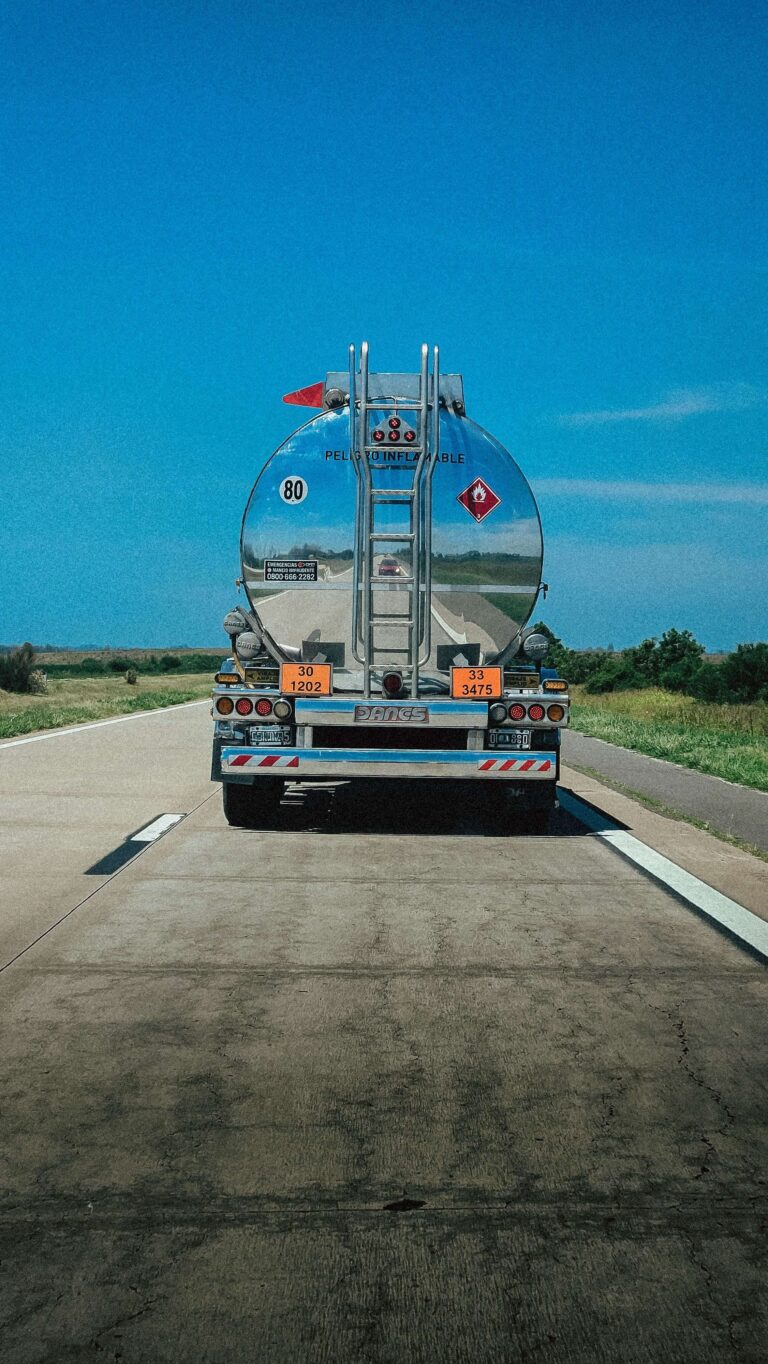
In practical terms, ADR is the reason a lorry carrying chemicals displays orange warning plates. It is the reason certain delivery drivers carry specific qualifications. It is the legal framework that determines how paints, solvents, batteries, gases, acids, and thousands of other common commercial substances must be transported by road to protect people, property, and the environment.
ADR is not a UK-specific rule — it is an international agreement used across Europe and beyond. But it has been incorporated into UK domestic law and continues to apply in Great Britain following the UK’s departure from the EU.
2. What Does ADR Stand For in Transport?
ADR stands for Accord Dangereux Routier — a French phrase meaning “Agreement on Dangerous Goods by Road.” Its full official name is the European Agreement Concerning the International Carriage of Dangerous Goods by Road.
The agreement was first established in 1957 under the auspices of the United Nations Economic Commission for Europe (UNECE). It was created to provide a consistent regulatory framework for the movement of dangerous goods by road across national borders in Europe — ensuring that a lorry carrying hazardous chemicals in France would be subject to the same rules as one crossing into Germany or the Netherlands.
ADR in full: Accord Dangereux Routier
Full English name: European Agreement Concerning the International Carriage of Dangerous Goods by Road
Origin: United Nations Economic Commission for Europe (UNECE), 1957
Updated: Every two years (even-numbered years)
Applies in UK via: The Carriage of Dangerous Goods and Use of Transportable Pressure Equipment Regulations 2009 (as amended)
Despite its name referencing “international carriage,” ADR applies to domestic road transport within the UK as well — not just cross-border movements. If you are moving dangerous goods from Birmingham to Leeds, the same ADR rules apply as if you were crossing from the UK into France.
ADR is updated every two years by UNECE, with each new edition incorporating changes to classifications, packaging requirements, and safety standards as chemical and battery technology evolves. The most recent updates have included significant changes to the rules for lithium battery transport, reflecting the rapid growth of electric vehicles and portable electronics.
3. How ADR Applies in the UK
Although ADR is a European agreement, it continues to apply in Great Britain following Brexit through the Carriage of Dangerous Goods and Use of Transportable Pressure Equipment Regulations 2009 (CDG Regulations), as amended by subsequent legislation. These regulations incorporate the substantive requirements of ADR into UK domestic law.
In Northern Ireland, the position is slightly different — Northern Ireland continues to align more closely with the EU framework under the terms of the Windsor Framework, and the ADR regulations apply there as part of the UK-EU relationship for goods moving between Northern Ireland and the Republic of Ireland.
The Health and Safety Executive (HSE) is the primary competent authority for dangerous goods transport by road in Great Britain, alongside the Driver and Vehicle Standards Agency (DVSA). Both organisations have enforcement powers — the HSE primarily in relation to the wider regulatory framework, and the DVSA in relation to vehicles and drivers on the road.
Who enforces ADR in the UK?
The Health and Safety Executive (HSE) and the Driver and Vehicle Standards Agency (DVSA) are the primary enforcement bodies for ADR in Great Britain. DVSA officers can stop and inspect vehicles carrying dangerous goods, check driver ADR certificates, verify documentation, and prohibit vehicles from continuing if they are non-compliant. Penalties for ADR breaches include fixed penalty notices, prohibition notices, and prosecution — with unlimited fines and potential imprisonment for serious breaches.
4. What is ADR Transport — and When Does It Apply?
“ADR transport” is the term used to describe the road transport of goods that fall within the scope of the ADR regulations — that is, goods classified as dangerous under the ADR framework. If a substance or article has been assigned a UN number and an ADR hazard class, it requires ADR-compliant transport when moved by road.
This covers a far broader range of goods than most people expect. ADR transport is not just for tankers carrying industrial chemicals or lorries carrying explosive materials. It applies to enormous quantities of everyday commercial products that happen to be classified as hazardous under ADR:
- Paints, varnishes, and lacquers (flammable liquids — Class 3)
- Aerosol products including deodorants, sprays, and cleaning products (gases — Class 2)
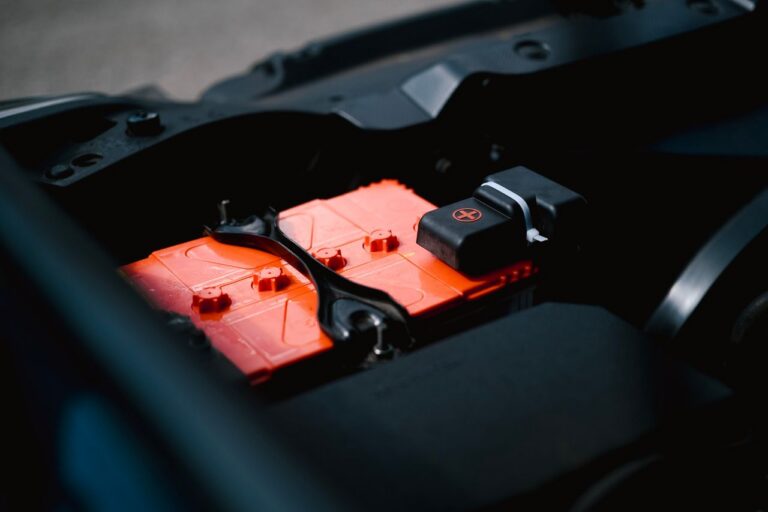
- Lithium-ion batteries in laptops, phones, power tools, and electric vehicles (Class 9)
- Industrial cleaning chemicals including bleach, acids, and alkalis (corrosives — Class 8)
- Pesticides and herbicides (toxic substances — Class 6)
- Hydrogen peroxide above certain concentrations (oxidising substances — Class 5)
- Solvents, fuels, and adhesives containing flammable liquids (Class 3)
- Compressed gas cylinders including oxygen, LPG, and refrigerant gases (Class 2)
If your business manufactures, distributes, or uses any of these products — or generates them as waste — you are likely already involved in ADR transport, whether you realise it or not.
The key question: Does your product have a UN number?
The quickest way to determine whether a substance requires ADR transport is to check its Safety Data Sheet (SDS). Section 14 of every SDS contains the transport information — including the UN number, proper shipping name, and ADR hazard class. If Section 14 contains a UN number and a hazard class, the product requires ADR-compliant transport when moved by road.
5. The ADR Dangerous Goods Classes Explained
ADR divides dangerous goods into nine classes based on the primary hazard they present. Understanding which class your goods fall into is the starting point for understanding how they must be transported.
| Class | Hazard Type | Common Examples |
|---|---|---|
| Class 1 | Explosives | Fireworks, ammunition, airbag inflators, detonators. Requires specialist licensing — not carried by most ADR operators. |
| Class 2 | Gases | LPG, aerosols, compressed gas cylinders, oxygen, acetylene, refrigerant gases. |
| Class 3 | Flammable Liquids | Petrol, solvents, paints, lacquers, alcohols, adhesives — one of the most common ADR classes in commercial transport. |
| Class 4 | Flammable Solids | Matches, metal powders, self-reactive substances, desensitised explosives, spontaneously combustible materials. |
| Class 5 | Oxidising Substances & Organic Peroxides | Hydrogen peroxide, ammonium nitrate, bleach, potassium permanganate, organic peroxides. |
| Class 6 | Toxic & Infectious Substances | Pesticides, herbicides, cyanides, industrial chemical reagents, biological substances, medical waste. |
| Class 7 | Radioactive Material | Radioactive isotopes, nuclear material. Requires specialist licensing and transport provisions — not carried by most ADR operators. |
| Class 8 | Corrosive Substances | Sulphuric acid, hydrochloric acid, sodium hydroxide, battery acid, industrial cleaning chemicals, electroplating solutions. |
| Class 9 | Miscellaneous Dangerous Goods | Lithium batteries, dry ice, magnetised materials, environmentally hazardous substances, EV batteries. |
Some goods have more than one hazard — for example, a substance might be both flammable and toxic. In these cases, ADR assigns a primary class based on the dominant hazard and a subsidiary risk for the secondary hazard. Both must be communicated on the packaging and transport document.
Packing Groups
Within each class, dangerous goods are further subdivided into packing groups that reflect the degree of hazard:
- Packing Group I (PG I) — high danger
- Packing Group II (PG II) — medium danger
- Packing Group III (PG III) — low danger
The packing group determines the packaging specification required for the goods. A substance in Packing Group I requires more robust, more tightly tested packaging than one in Packing Group III — even if they are in the same ADR class.
6. What ADR Transport Requires
ADR compliance is not a single certification or a single document — it is a set of interlocking requirements that cover every element of a dangerous goods movement. Here is what ADR transport requires in practice:
ADR Driver Certification
Every driver carrying dangerous goods by road must hold a valid ADR vocational training certificate (often called an ADR licence, though technically it is a certificate). The certificate is issued following training and examination by an approved body, and must be renewed every five years.
Importantly, ADR certificates are class-specific. A driver certified for Class 3 flammable liquids is not automatically authorised to carry Class 2 gases or Class 6 toxic substances without the relevant additional endorsement. The driver’s certificate must cover the class of the goods being transported.
UN-Approved Packaging
Dangerous goods must be packed in packaging that has been tested and certified to the relevant UN specification for the goods being transported. The outer packaging must display the UN mark — a series of codes indicating the packaging type, material, performance standard, and the goods it is approved for.
Inner packaging (where used) must protect the contents from leakage and damage. Liquids must be packed with absorbent material. Batteries must be individually protected against short-circuit. The packaging specification depends on the ADR class and packing group of the goods.
Correct Labelling and Marking
Outer packaging must display:
- The UN number of the substance (e.g. UN 1263 for paints, UN 3480 for lithium-ion batteries)
- The ADR hazard diamond — the class-specific hazard label indicating the primary hazard (and subsidiary risk label if applicable)
- Orientation arrows on packages containing liquids
- Additional marks required by the specific packing instruction (e.g. the lithium battery handling mark for UN 3480/3481)
Dangerous Goods Transport Document
Every ADR shipment must be accompanied by a Dangerous Goods Transport Document — a written record that travels with the goods from collection to delivery. It must include:
- The UN number (in the format “UN XXXX”)
- The proper shipping name of the goods
- The ADR class and subsidiary risk (if any)
- The packing group (where assigned)
- The total quantity (by mass or volume)
- The number and type of packages
- The name and address of the consignor (sender) and consignee (recipient)
Written Instructions for the Driver
In addition to the transport document, the driver must carry written instructions in the cab of the vehicle at all times during transit. These instructions — specified by ADR in a standard format — tell the driver what actions to take in the event of an accident or emergency involving the dangerous goods being carried. A separate instruction sheet is required for each ADR class being transported.
Vehicle Equipment Requirements
ADR specifies minimum equipment requirements for all vehicles carrying dangerous goods. This includes:
- One or more fire extinguishers of the appropriate type and rating for the goods being carried
- Wheel chocks
- Two self-standing warning signs (cones or reflective triangles)
- Eye rinse liquid (for certain classes)
- A high-visibility vest for each crew member
- A torch (non-sparking for flammable goods)
- Personal protective equipment appropriate to the goods being carried
- A shovel, drain seal, and collecting container for liquid spills (for certain classes)
Vehicle Marking and Placarding
Vehicles carrying dangerous goods above certain quantities must display orange warning plates — rectangular orange panels displayed front and rear. For tankers and bulk loads, the orange plates include the hazard identification number and UN number. For package loads, plain orange plates are used. Vehicles may also need to display hazard diamond placards for the classes being carried.
7. ADR Limited Quantities and Excepted Quantities
Not every consignment of dangerous goods requires full ADR compliance. ADR provides two important exemption pathways for smaller quantities of certain substances — limited quantities and excepted quantities:
ADR Limited Quantities (LQ)
The limited quantities provision allows certain dangerous goods to be transported with significantly reduced ADR requirements when they are packed in small amounts per inner package, below the thresholds specified for each substance. The thresholds vary by substance — typically ranging from 0.5 litres to 5 litres per inner package for liquids, and 0.5kg to 5kg for solids.
Under the limited quantities provision, the sender does not need to complete a full Dangerous Goods Transport Document, the driver does not need an ADR certificate, and the vehicle does not need to display orange warning plates. However, the outer packaging must still be correctly marked with the limited quantity mark (a diamond-shaped mark with “Y” inside it, or the LQ mark), and the goods must be packed to the specified inner package limits.
Limited quantities transport is a practical option for many businesses that ship moderate amounts of paints, cleaning chemicals, aerosols, and other common commercial dangerous goods in retail-sized containers.
ADR Excepted Quantities (EQ)
The excepted quantities provision applies to even smaller amounts of certain dangerous goods — typically individual sample sizes or very small retail quantities. Under excepted quantities, the requirements are minimal: correct inner and outer packaging, a simple mark on the outer packaging, and basic record-keeping. No transport document, driver certification, or vehicle marking is required.
The quantity thresholds for excepted quantities are very low — typically between 1ml and 30ml for liquids per inner package, depending on the substance — and the provision does not apply to all dangerous goods classes. It is genuinely only appropriate for very small quantities.
Important: Limited quantities and excepted quantities are not full exemptions from ADR — they are reduced-requirement pathways. The goods are still classified as dangerous, and the sender still has obligations regarding packaging and marking. If you are unsure whether your consignment qualifies for limited quantities or excepted quantities, our team can advise before you ship.
8. Who is Responsible Under ADR?
One of the most commonly misunderstood aspects of ADR is the question of who bears legal responsibility for compliance. Many businesses assume that once they hand their goods to an ADR-certified carrier, their obligations end. This is not the case.
ADR places obligations on multiple parties involved in a dangerous goods movement:
The Consignor (Sender)
The consignor is responsible for correctly classifying the dangerous goods, using compliant packaging that meets the UN specification, applying the correct labels and UN number markings to the outer packaging, completing or providing accurate information for the Dangerous Goods Transport Document, and ensuring the goods are in a condition that is safe for transport. The consignor’s obligations exist whether or not they employ a DGSA — though a DGSA appointment is legally required for most consignors of dangerous goods.
The Carrier (Transport Operator)
The carrier is responsible for ensuring the driver holds the appropriate ADR certificate for the goods being carried, the vehicle meets ADR equipment requirements, the transport documentation is present and correct, the vehicle is correctly marked and placarded, and the written driver instructions are in the cab. The carrier must also have a DGSA appointed.
The Consignee (Recipient)
The consignee has an obligation not to refuse or delay acceptance of dangerous goods without good reason, as this could force the carrier to hold the goods in a non-compliant or unsafe situation. The consignee also becomes responsible for the goods from the point of delivery.
The Driver
The driver has personal legal obligations under ADR — including holding valid certification, following the written instructions, reporting incidents, and not continuing a journey if a dangerous situation exists. A driver who knowingly drives with non-compliant documentation, incorrect packaging, or without the correct ADR certificate commits a criminal offence regardless of what their employer instructs.
The key takeaway for businesses:
Booking an ADR-certified carrier does not absolve you of your own legal obligations as the sender. If you ship dangerous goods regularly — chemicals, batteries, aerosols, or any other ADR-classified substance — your business has its own ADR compliance requirements, including the obligation to appoint a DGSA. Our team can advise on consignor obligations as part of every booking.
9. ADR Transport vs Standard Courier — The Difference
A question we are regularly asked is: “Can I just use a standard courier for my goods?” The answer depends on whether those goods are classified as dangerous under ADR. If they are, the answer is no — and attempting to do so creates significant legal and commercial risk.
| Standard Courier | ADR Certified Transport | |
|---|---|---|
| Driver certification | No ADR certificate required | ADR certificate required — class specific |
| Vehicle equipment | Standard delivery vehicle | ADR-compliant fire suppression, spill kit, PPE, warning signs |
| Documentation | Delivery note or waybill only | Dangerous Goods Transport Document + written driver instructions |
| Packaging check | Not checked for ADR compliance | UN-approved packaging verified before collection |
| Vehicle marking | No hazard plates or labels | Orange warning plates and class placards as required |
| Legal status for dangerous goods | Non-compliant — criminal offence | Fully compliant with ADR regulations |
| Incident liability | Significant — both sender and carrier exposed | Managed through compliance — documentation provides protection |
Standard parcel networks — including major national couriers — are not equipped to carry dangerous goods. Their terms and conditions typically prohibit the shipment of ADR-classified goods entirely. If dangerous goods are found in the network, they may be removed, destroyed, or both — and the sender faces liability for any consequences.